Newark spent the past week looking back at one of the most important chapters in New Jersey house music history.
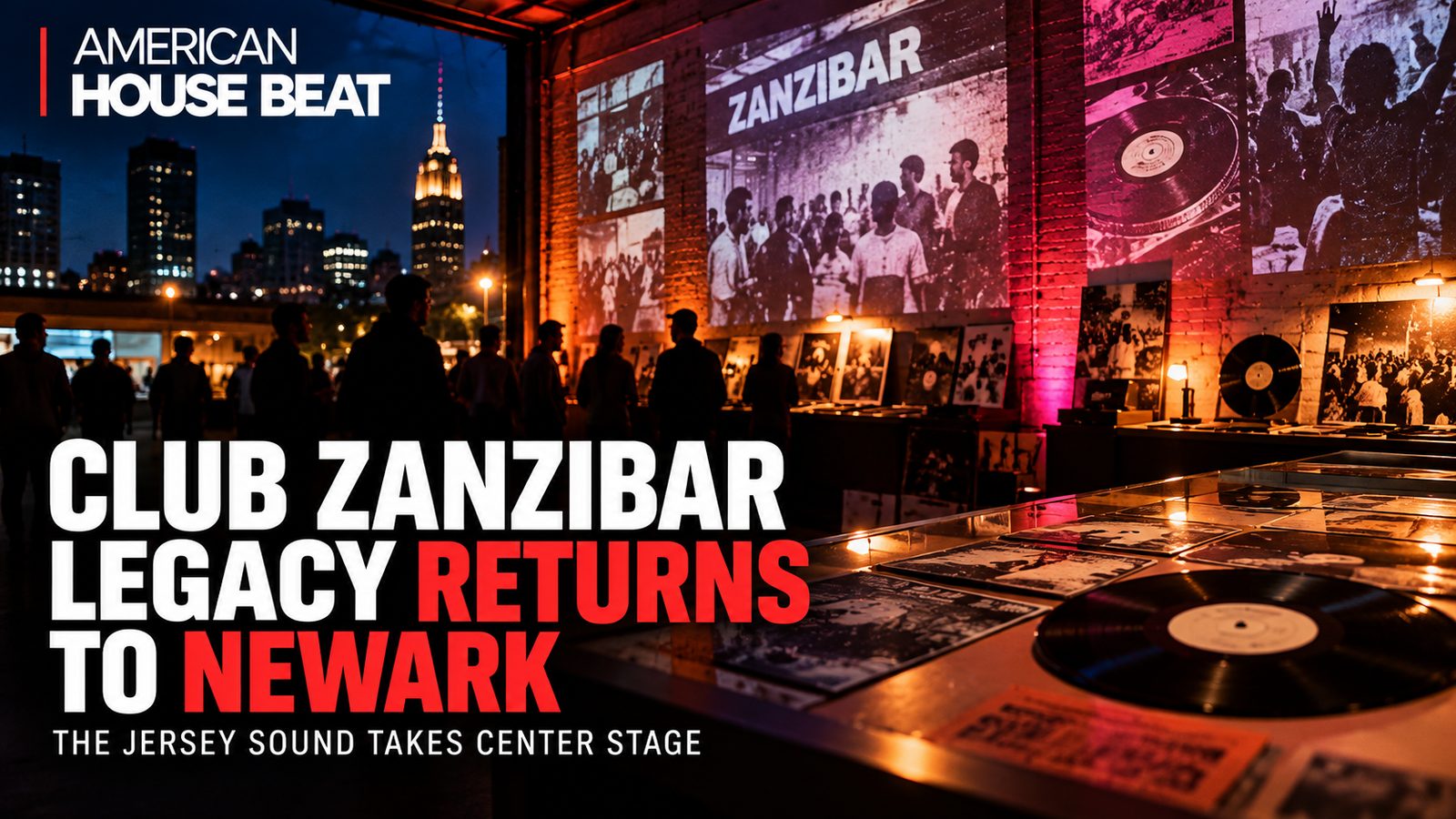
A House Called Zanzibar: Where Do You Go When The Party’s Over? brought the legacy of Club Zanzibar back into the city during the 2026 Newark Arts Festival through archival photography, short films, sound, vinyl, installations and live programming.
The project marked 47 years since the club was established in 1979, initially as Abe’s Disco at the Lincoln Motel, before becoming one of the defining spaces in the development of the Jersey Sound and Black nightlife in Newark.
Presented by Newark-born artists Ashley Younniä and nii.a.k in collaboration with curator Andrece Brady and A Journey Through House, the project placed the club’s history inside a wider conversation about preservation.
That distinction matters.
Club Zanzibar is not important simply because it belongs to house music history.
Its legacy sits inside a specific American story about cities, Black nightlife, DJs, community and the spaces that allowed regional dance music identities to develop before they became part of a global electronic culture.
The exhibition featured photography by Vincent Bryant, who documented Zanzibar from inside the club, alongside video, sound and vinyl material connected to the venue and the Jersey scene.
Its title references “Where Do You Go When The Party’s Over?”, a track strongly associated with Zanzibar resident DJ Tony Humphries.
Humphries became one of the central figures in what came to be recognised as the Jersey Sound, a style rooted in soulful house, club culture and the musical communities surrounding New Jersey and New York.
But the Zanzibar story reaches beyond one DJ.
The club became a meeting point where music, fashion, performance and Black queer nightlife could coexist. Its influence continued through producers, singers, DJs and labels whose records later travelled internationally.
The Newark Arts Festival programme was designed to explore precisely that relationship between memory and the present.
Events included discussions about preserving the Jersey Sound, large-scale projections of archival photography, an official afterparty at Newark Culture Club and an artist talk involving people who documented the original scene.
The official afterparty featured Ashley Younniä, nii.a.k, DJ Gonzalo Silva and DJ Punch Zanzibar.
For American house music, projects like this have a significance that goes beyond nostalgia.
The history of US dance music is often reduced to a few familiar geographical markers: Chicago for house, Detroit for techno and New York for disco and club culture.
New Jersey complicates that simplified map.
The Jersey Sound developed its own musical language and its own network of clubs, DJs and record stores. Club Zanzibar became one of the places where that identity could exist physically.
Bringing that story back into Newark therefore becomes an act of cultural preservation.
As house music continues to expand across major American festivals and global electronic markets, projects such as A House Called Zanzibar help reconnect contemporary audiences with the local communities that built the culture long before it became an international industry.
The festival programme concluded on October 11, but the larger subject remains open.
The question is no longer only where people went when the party was over.
It is how the history of those parties can be preserved so that the next generation understands where American house music came from.